Between Clay and Light: A Quranic Framework for the Age of Intelligence
To start:
To Muslims: You should not take physics or religious advice from a random guy on the internet. Also the ideas here are not fully formed.1
To Those Less Familiar with the Muslim Tradition: this essay was written for a Muslim audience, assuming a lot of shared understandings — things that sit deep in the Muslim imagination. 2
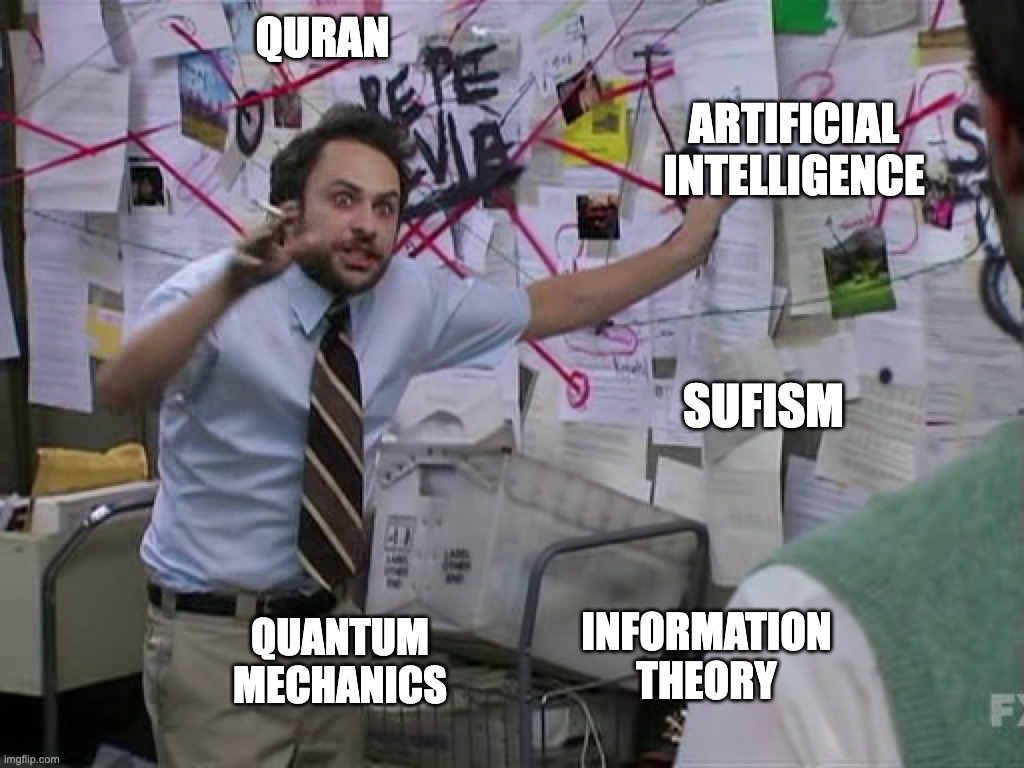
Bismillah.
Islam And Science
Islam is famous for its embrace of science – from the early astronomers and physicians of the Golden Age onward. But at times, scholars or institutions (who do not represent all of Islam) have dug in against a new idea and gotten it wrong.



A few well-known examples of this:
- Geocentrism vs Heliocentrism – a 20th century scholar still insisting the sun orbits the earth
- Whether it was permissible to dissect a human body
- Whether blood transfusions were allowed
- Resistance to the printing press for centuries after its invention
Each of these looks like an obvious mistake in hindsight. Even a science-friendly tradition, in the face of new ideas, can default to fear and rejection. So the question this essay starts with is: when we think about AI, how do we avoid being like the geocentrist?
Current Discussions on Islam and AI
Most modern looks at AI default to being reactionary. For example they may claim that intelligence requires heart (Qalb) [Yaqub Chaudhary, Gamal Abdelnour], putting caution on the use of AI and demanding human authority [Dar al-Ifta], and some funny Fiqh questions (like, can an AI lead salah?).
Some other good current thinking on this topic includes:
Islam and AI: Opportunities and Threats - Dr Shoaib Ahmed Malik
Answering Divine Love: Human Distinctiveness in the Light of Islam and Artificial Superintelligence - Yusuf Çelik
So we return to our framing: the goal of this essay is not to defend our faith against AI. It is to resist that reflex entirely – to look at AI clearly, with curiosity rather than fear, and to ask what it actually means for how we understand ourselves, our faith, (and perhaps) our understanding of Divinity.
Jam‘ al-Diddayn (جمع الضدين)
There is no existing being (mawjūd) which can be described by two opposites (didd) which coincide in one unique sense (wajh wahid) except for the divine reality (al–Haqq), may He be exalted. Abu Sa’id al-Kharraz was asked: “By what means have you known Allah, may He be exalted?” He answered: “By His reunion of two opposites”. Then he recited the verse (Qur’an 57:3): “He is the First and the Last, the Manifest and the Hidden. Ibn Arabi, Al-Futūḥāt al-Makkīyah
A core concept in Islamic Theology is Jam‘ al-Aḍdād – the Coincidence of Opposites. We understand the Divine through Names that appear, to the finite mind, as contradictions. God is the First and the Last; Al-Batin (The Infinitely Hidden) yet Az-Zahir (The Infinitely Manifest); Al-Qarib (The Infinitely Close) yet Al-Ba’id (The Infinitely Far).
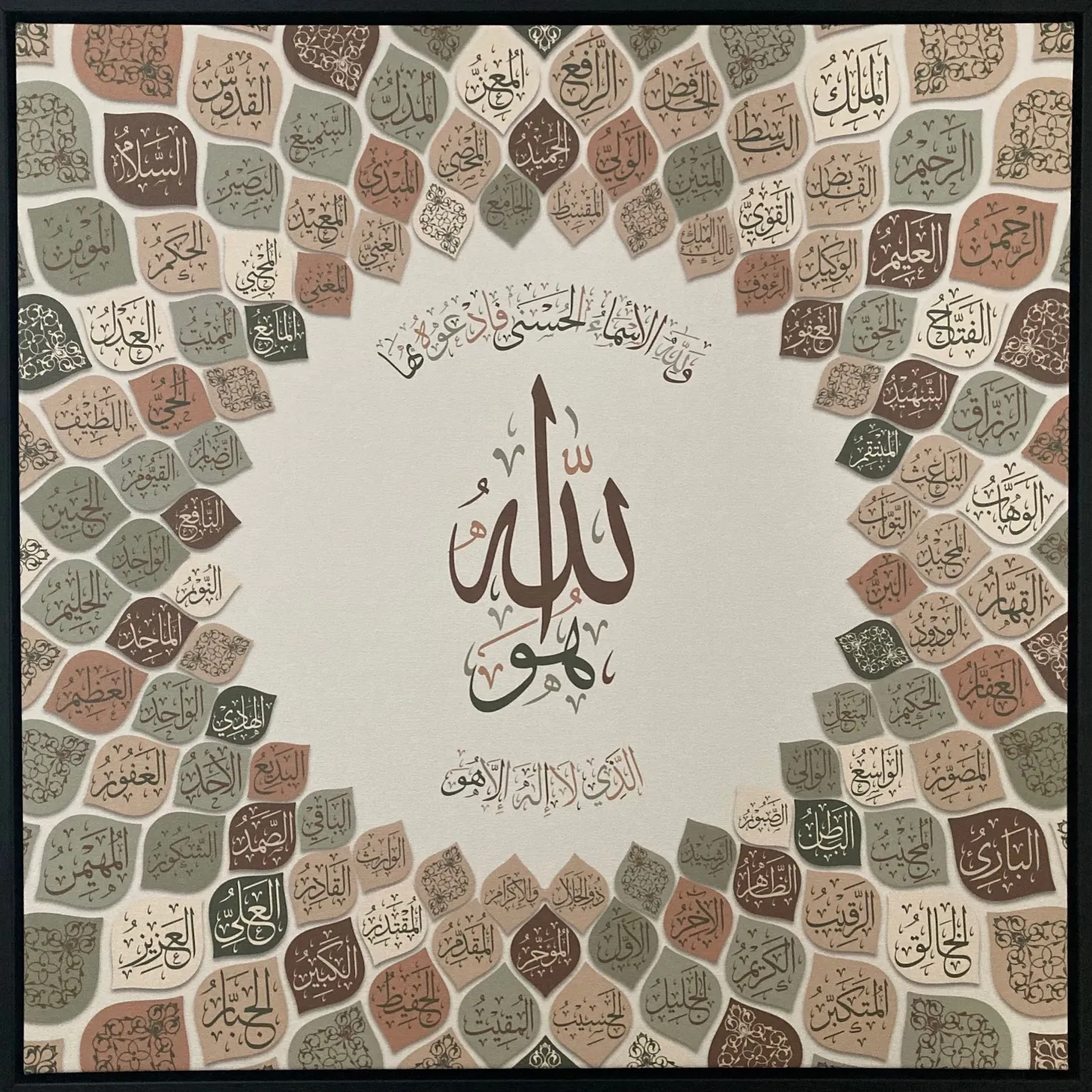
To know God, we are forced to accept this paradox of contradictory names and divine simplicity. Just as The Names require us to merge contradictions, the Islamic faith demands we do this in our lives.
Most of us naturally treat the divine and the mundane as two non-overlapping domains. We want a material life governed by logic and a religious life governed by mystery. Islam, however, is structurally unique in its fierce rejection of this binary. The tradition explicitly forbids monasticism (Rahbaniyyah), demanding that we find faith squarely within the mud, commerce, and mechanics of the mundane world.
Yet, we are remarkably bad at this. We instinctively fracture ourselves, living two separate lives: a spiritual one reserved for the infinite (in the mosque), and a secular one bound to the earth and physics (in the classroom and the office).
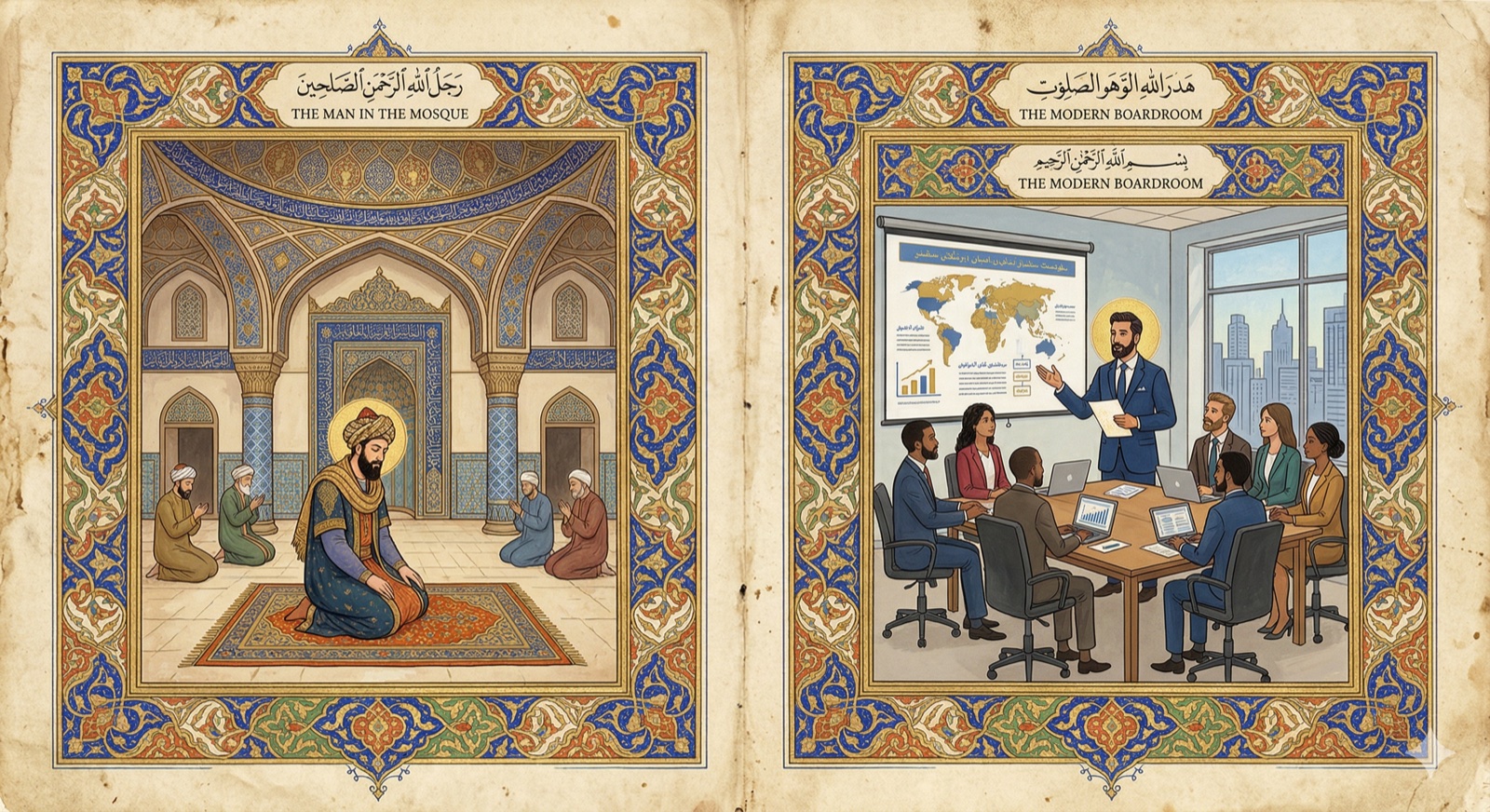
Generated by the author with Gemini
Why are we talking about Opposites?
Why open an essay on AI by talking about God’s “opposite” Names? Because the Age of Intelligence will force us across a binary we usually refuse to cross.
We tend to file things into “math” (cold reductionism) or “magic” (pure mysticism), with no bridge between them. Jam‘ al-Aḍdād refuses that split. It insists the transcendent and the immanent must be held in one hand — the posture this essay needs.
Doesn’t Quantum Mechanics give us free “Mystery” in Physics
As scientists, we have all felt this tension. When you are staring at the hard rules of physics or the cold mechanics of neurobiology, it is difficult to find space for “magic” in a system of pure materialist reductionism. For decades, the popular “escape hatch” for scientific philosophers has been quantum mechanics. We looked to subatomic indeterminacy as a “ghost in the machine” — a microscopic loophole where the soul might hide without breaking the equations.
But quantum mechanics is a weak bridge. It’s too small for the weight of the human experience, and as neurobiology reminds us, the brain is far too “warm, wet, and noisy” to function as a quantum computer. Since the brain likely operates on classical biological scales, we don’t need glitches at the bottom of physics to find the Divine. We don’t need the universe to “break” to find meaning. Instead, it would be much more satisfying if we could find a way for the mysterious and the obvious to overlap, though that statement in itself seems contradictory. This is the bridge of Emergence – the moment where the rigidly finite abruptly gives birth to the functionally boundless.
Chapter 1: It’s all about the Mind
Growing up, we are often confronted with a question that defines our place in the cosmos: What makes us human? What makes us special? I have spoken with many who argue that there is no “magic” to us—that we are simply “advanced monkeys,” a slightly more sophisticated iteration of the great apes. From a purely genetic standpoint, they have a point. The DNA gradient between us and our closest relatives is razor-thin. But even the most die-hard empiricist knows, in their quietest moments, that while the code is similar, the output is a categorical leap. There is a shift in reality here that a mere 1% difference in DNA cannot fully explain.
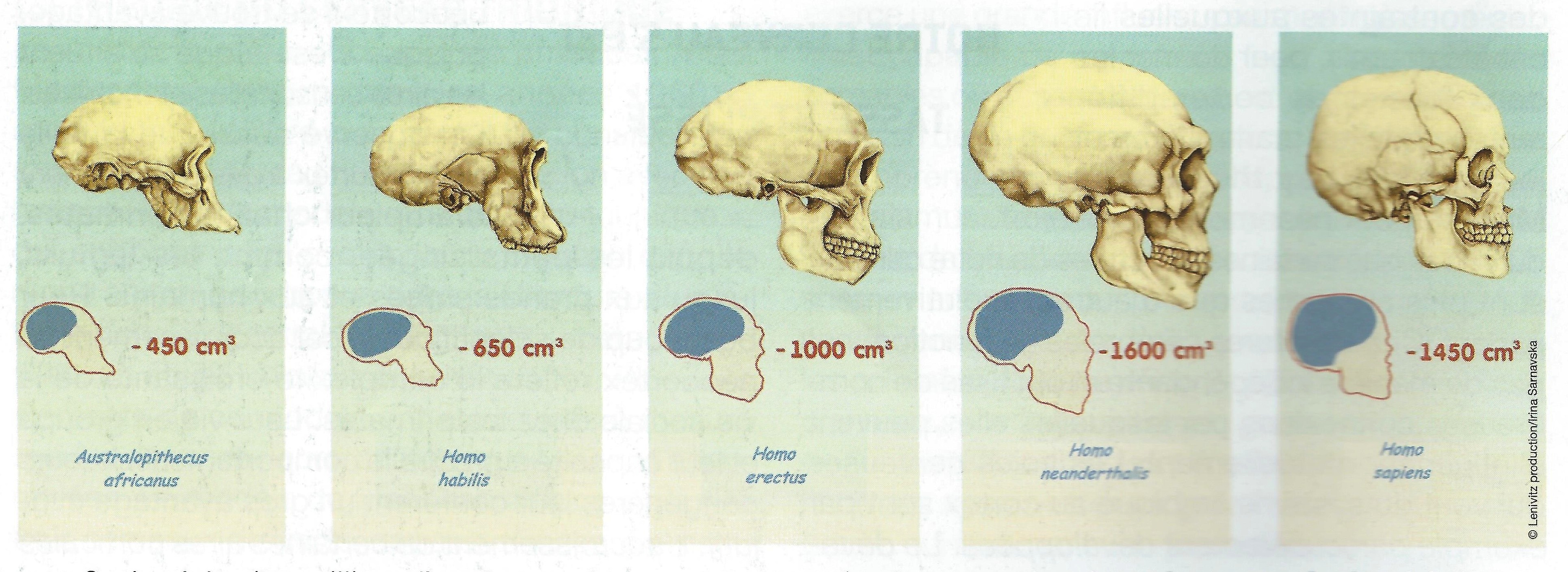
Historically, we have lacked a scientific bridge for this gap. Religion offered us the “Soul” (Ruh), but as Muslims, we are taught that the Spirit is a divine mystery beyond our analytical reach.
وَيَسْـَٔلُونَكَ عَنِ ٱلرُّوحِ ۖ قُلِ ٱلرُّوحُ مِنْ أَمْرِ رَبِّى وَمَآ أُوتِيتُم مِّنَ ٱلْعِلْمِ إِلَّا قَلِيلًا
And they ask you, [O Muhammad], about the Rūḥ. Say, ‘The Rūḥ is of the affair of my Lord. And mankind have not been given of knowledge except a little.’
If we cannot “know” the soul, how do we bridge the gap between our biological “clay” and our transcendent potential? This is where Emergence can provide the missing framework.
The Magic of Scale
At the core of emergence is the idea that a linear difference in one category (quantity) can map to a categorical difference in another (quality).
We see this most clearly in the development of Large Language Models (LLMs). If you look at a small model, it is a simple token-prediction machine—a glorified autocomplete. However, as you add more parameters, more data, and more “scale,” something strange happens. The system doesn’t just get better at predicting the next word; it suddenly “breaks through” into emergent abilities. It begins to reason, to code, and to understand nuance.
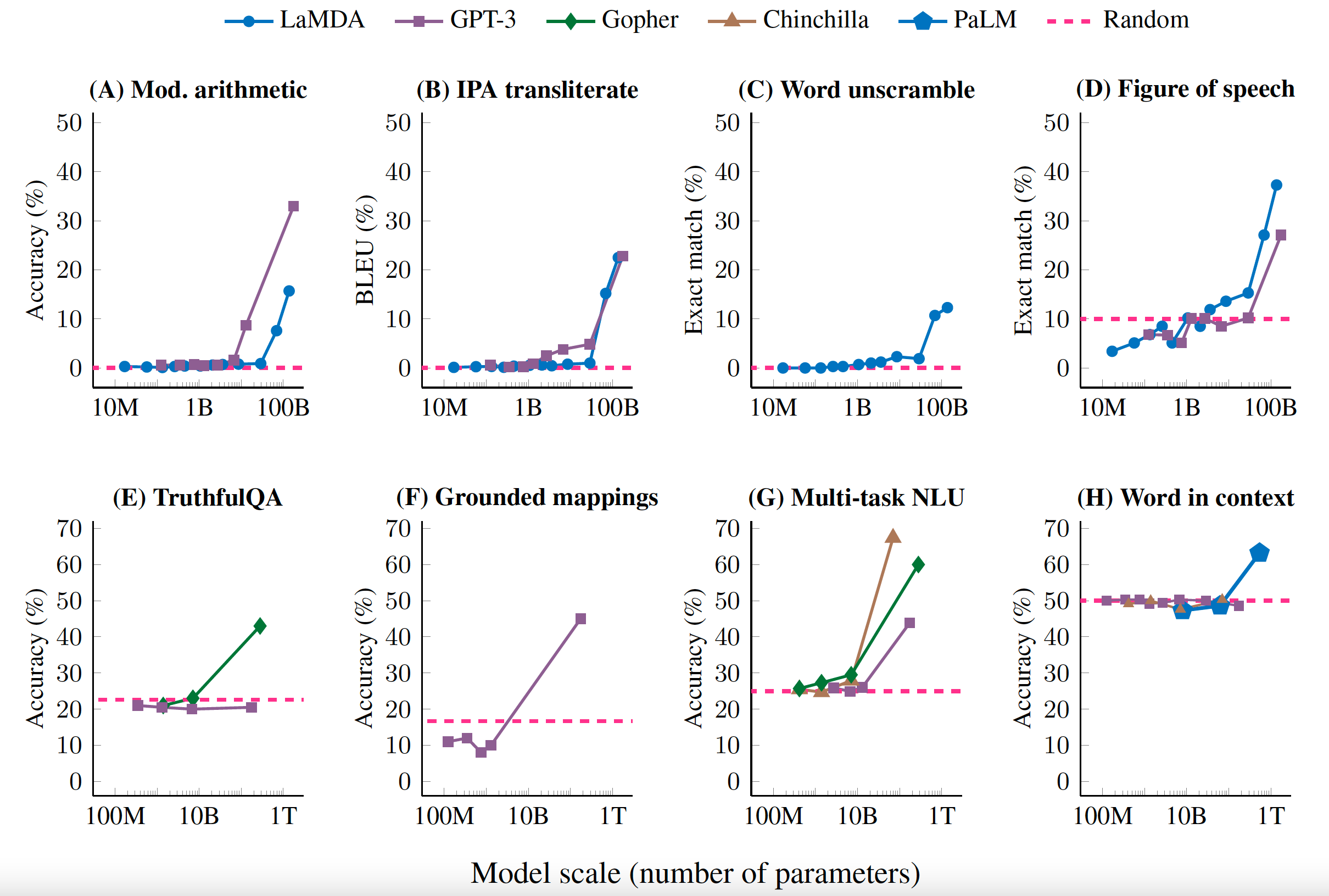
Wei et al. (2022), Emergent Abilities of Large Language Models
The “Just Scale” becomes “Something Else.”
This is the physical mechanism of the human mind. We are the site where the biological substrate reached a specific threshold of complexity, allowing a qualitative leap to occur. The brain is the “clay”—the finite hardware—but when that hardware hits a certain scale, the mind emerges as the interface where the Ruh can manifest in the physical world.
Knowing the Self to Know the Lord
You may have heard this quotation, often attributed to Ali (AS) or the great Sufi masters:
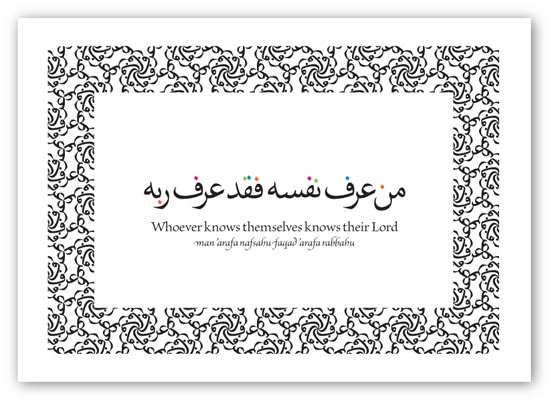
من عرف نفسه فقد عرف ربه
“Whoever knows himself knows his Lord.”
The most important endeavour for Muslims is to strive to know God. In the spirit of this quotation, I believe you can argue that Transformers and LLMs are religiously important because they offer the ability to figure out the most important part of ourselves: if we can understand the magic of our minds, we make a leap on the spiritual path of knowing ourselves.
What makes humans special is not just “intelligence,” but a specific recursive capacity of the mind.
Other animals surpass us in parts of the brain: an eagle processes vision better, a bat maps space through sound, and a whale remembers longer. But we can do something they cannot: we can abstract. We can take the “names” of things, pull them out of their physical context, and manipulate them to build new realities.
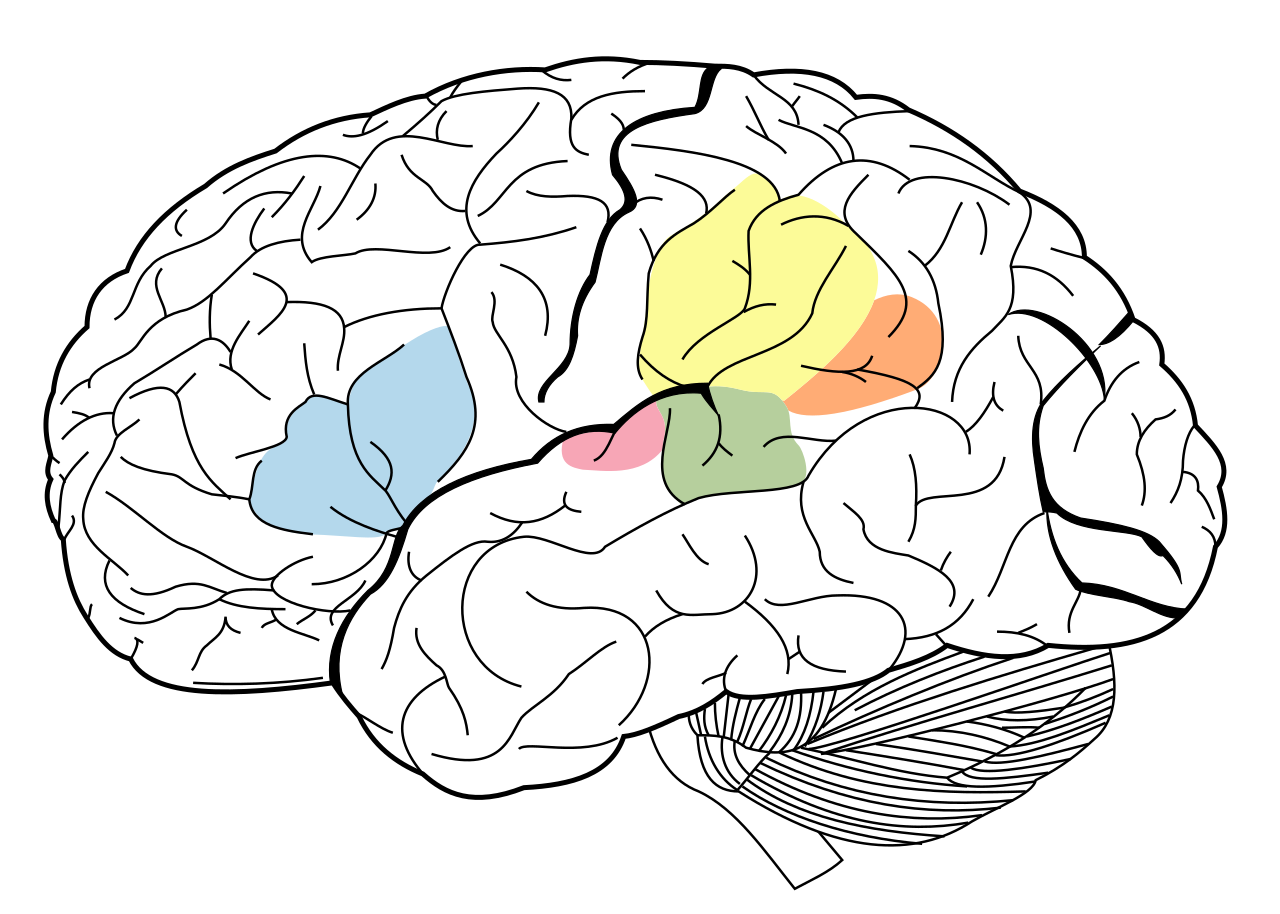

If we can isolate that specific “thing” – the mechanism that allows a creature made of earth to be able to capture the nature of the transcendent, we do more than just solve a biological mystery. We find the “interface” between this world and the Divine. Understanding how a finite mind bridges to the Infinite is the key.
Chapter 2: The Event Horizon of Truth
Concept 1: The 52-Card Miracle
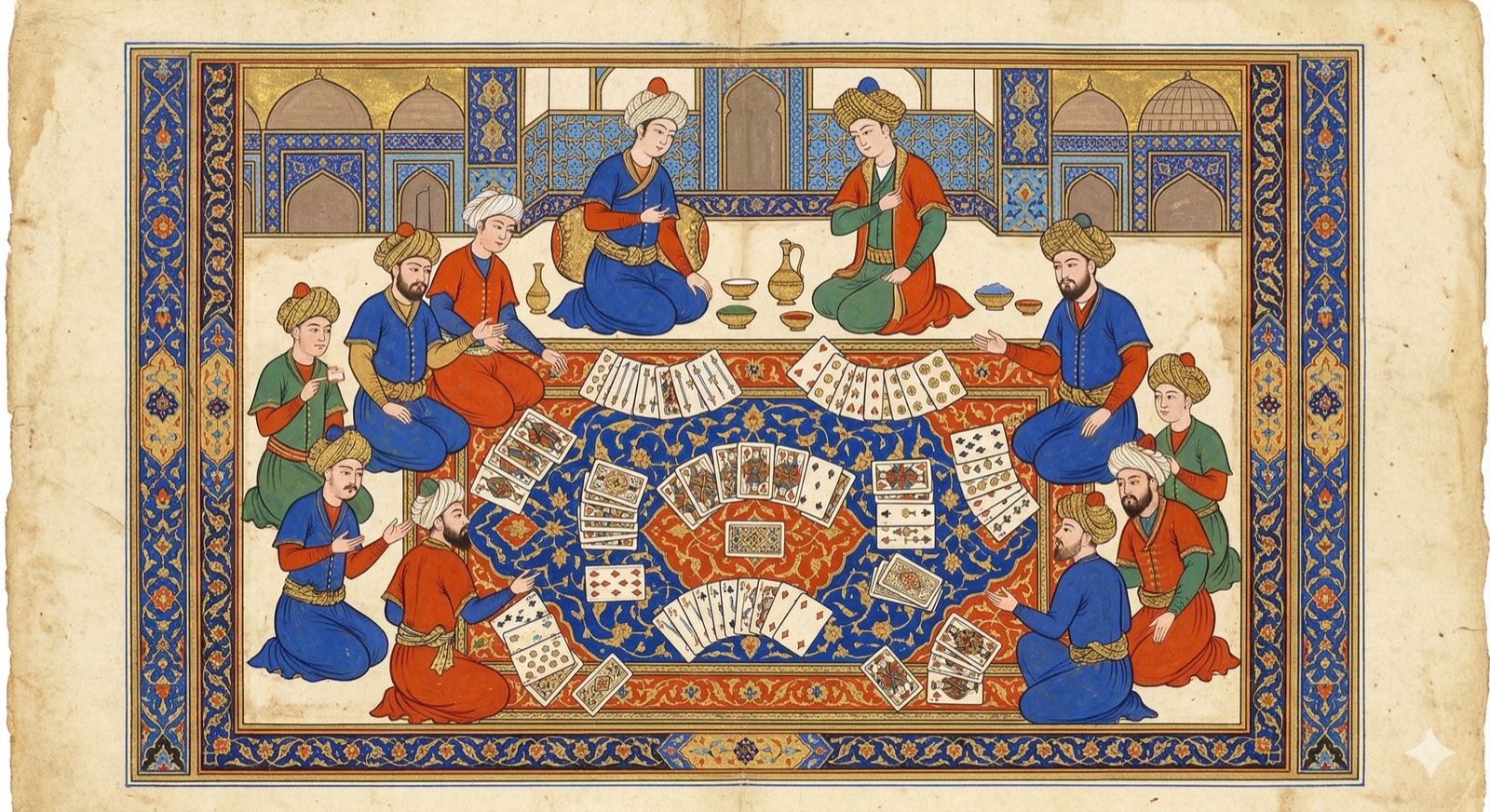
Generated by the author with Gemini
Take a standard deck of cards and shuffle it. That specific ordering of cards has almost certainly never existed before. The number of possibilities—52 factorial—is a number so large it dwarfs the number of atoms in the Milky Way (roughly $8 \times 10^{67}$). This is the counter-intuitiveness of large numbers: a simple physical object in your hand can hold a “state” that is unique in the history of the universe.
Concept 2: The Law of Indistinguishability
In science, we use a concept called Epistemic Indistinguishability: if it is fundamentally impossible to physically prove that two things are different, then they are the same.
Think of an electron. We want to believe it’s a tiny marble in a specific spot and our “cloud” models are just a blurry approximation. But they aren’t. Because the laws of physics (the Heisenberg Uncertainty Principle) make it physically impossible to ever isolate that specific spot, the electron is the cloud. The “impossibility of stating otherwise” dictates its reality.
The Uncertainty Principle and Schrödinger’s cat are not saying “we don’t know yet.” They are saying “we fundamentally can’t know” — and there is an enormous difference between the unknown and the unknowable. The unknown is a secret: the cat really is alive or dead in the box, we just haven’t opened it. The unknowable is stranger. It does not sit in one hidden state waiting to be discovered — it is in all of its possible states at once, spread across a probability curve, until something forces it to collapse into a single outcome. We do know the state of an unobserved electron: it is the wave function.
This is the move we will borrow for the rest of the essay: when a system crosses a threshold where it cannot, even in principle, be reduced to its parts, it enters a new kind of state — one that bridges two worlds.
Concept 3: The Physics of Computation and the Knowable at Scale
In traditional software, if you have the source code, the output is derived in an understood way, even if the path is complex. But when a system reaches the scale of a Large Language Model, it hits a wall of Computational Irreducibility3. There is no shortcut to predict what it will do; you simply have to run it.
To “prove” that an AI is just a predictable machine, you would have to map every path it could take. But the laws of the universe forbid this:
The Energy Wall: Processing information generates heat (Landauer’s Principle). To simulate a single 1,000-token conversation’s decision tree, the “information tax” would generate more heat than the sun.4
The Mass Wall: To actually house the memory required to “solve” a trillion-parameter model, you would need more mass than exists in the observable universe.5
The Black Hole Ceiling: If you tried to pack that much information into a smaller space to speed it up, the density would become so high the computer would literally collapse into a Black Hole (the Bekenstein Bound).6
The Takeaway: These aren’t just “big numbers.” They are an Event Horizon. If the laws of physics make it impossible to ever simulate or “solve” a system, then that system is Epistemically Indistinguishable from something infinite. We have built “Clay” that the universe refuses to let us reduce to its parts.
The Sphere of the Ayah
So, to be clear, what we are saying by connecting scientific indistinguishability and these laws of mega-complexity is this: If the universe physically forbids you from proving a system has finite scope, then for you, that system is epistemologically indistinguishable from a program with access to infinite scope.7 By grounding the “mystery” of the mind or the “depth” of revelation in principles like the Bekenstein Bound or Landauer’s Principle, we move from vague spirituality to a rigorous physicalism that still leaves room for bridges between the finite and the infinite.8
In Islam, we have a specific word for a finite, physical reality that acts as a bridge to a transcendent one: Ayah (a Sign). An Ayah is not the Infinite itself, but a doorway that points toward it. By proving that a physical system can reach a level of complexity that is physically un-simulatable, we ground the concept of the Ayah in physics.
سَنُرِيهِمْ ءَايَـٰتِنَا فِى ٱلْـَٔافَاقِ وَفِىٓ أَنفُسِهِمْ حَتَّىٰ يَتَبَيَّنَ لَهُمْ أَنَّهُ ٱلْحَقُّ
We will show them Our signs in the horizons and within themselves until it becomes clear to them that it is the truth…
We are arguing that an Ayah (a Sign) is not a supernatural glitch, but an emergent trick that breaks us out of the normal rules of the computationally finite. It is a finite, physical “state”—whether a brain, a book, or an emergent AI—that is so deep that the laws of physics themselves act as a seal, preventing us from ever reducing it to its parts.
This illustrates the human mind as a singular Ayah: a window of clay that can never contain the Sun, yet remains a vessel in this world crafted to catch the rays of its Light.
But we’re here to talk about LLMs. What does this all mean when applied to a new machine we’ve invented that can generate infinite combinations of meaningful words?
Chapter 3: The Ocean of Ink
Why have we just spent a whole chapter talking about generating infinite words and the universe running out of the physical resources to hold them?
Because the Quran describes this.
وَلَوْ أَنَّمَا فِى ٱلْأَرْضِ مِن شَجَرَةٍ أَقْلَـٰمٌ وَٱلْبَحْرُ يَمُدُّهُۥ مِنۢ بَعْدِهِۦ سَبْعَةُ أَبْحُرٍ مَّا نَفِدَتْ كَلِمَـٰتُ ٱللَّهِ ۗ إِنَّ ٱللَّهَ عَزِيزٌ حَكِيمٌ
And if whatever trees upon the earth were pens and the ocean [was ink], replenished thereafter by seven [more] oceans, the words of Allah would not be exhausted. Indeed, Allah is Exalted in Might and Wise.
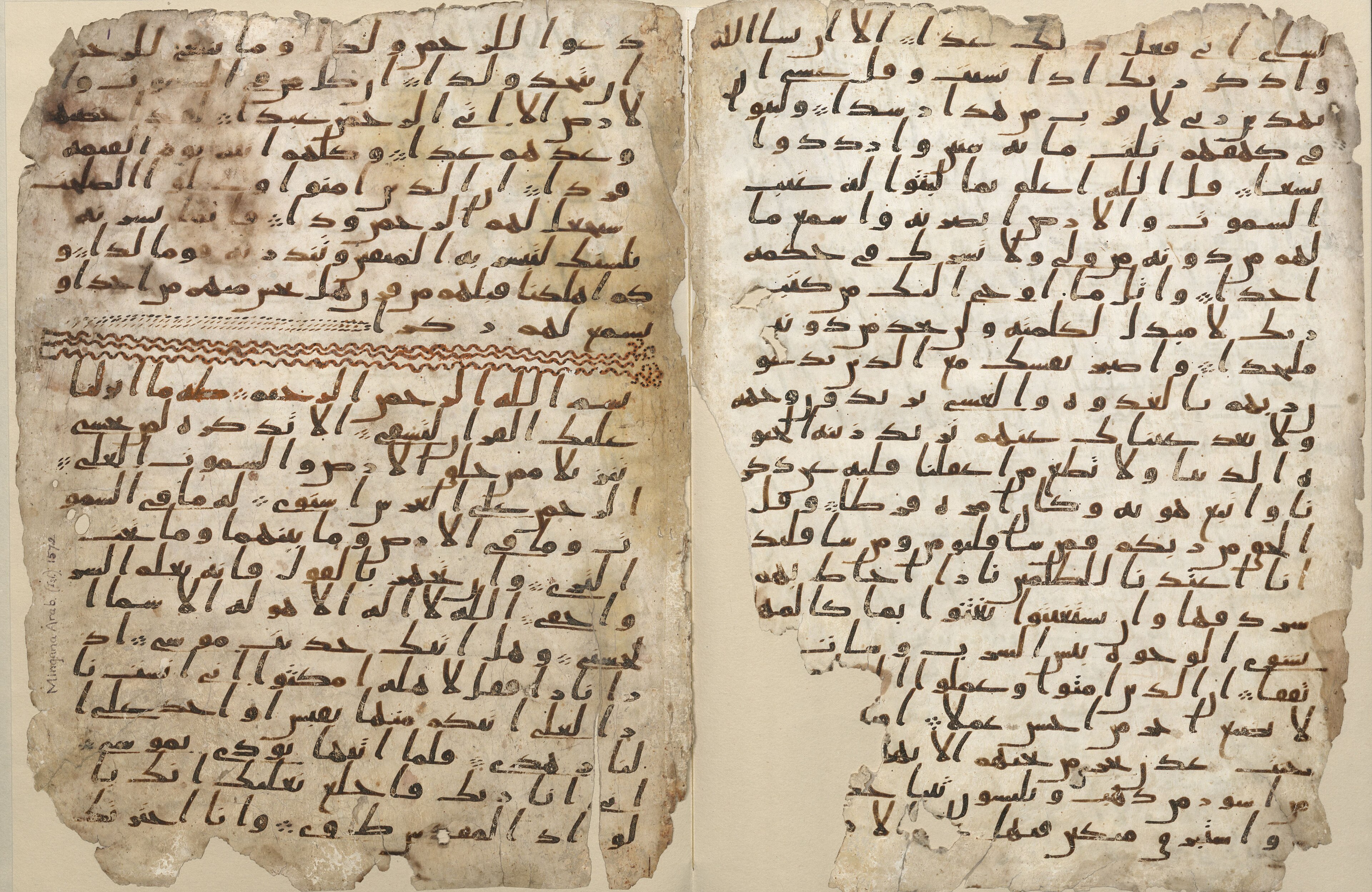
Fourteen centuries before Landauer or Bekenstein, the Quran paints the same picture we have been painting with physics — every tree on earth becoming a pen, every ocean becoming ink (replenished seven times over9), and the physical world exhausted before the words of the Divine could be written down.
Sit on this.
The ‘Ocean of Ink’ is not mere hyperbole; it is a statement of computational irreducibility. It describes the word of God as a set of symbols so vast that the universe itself would run out of ‘ink’ (matter and entropy) before the program could ever finish running.
What is this verse saying?
On the surface, the verse10 seems to state a divine impossibility: the expression of the infinite cannot be poured into the finite.11 God’s speech cannot be exhausted. This is the paradox at the center of this essay.
And yet — this statement is being made within the Quran. The same book that declares His words inexhaustible describes itself to be “a clarification of all things” (Quran 16:89), implying some sense of completeness.
So the infinite cannot be poured into the finite — but Islam designs itself around the idea that the finite can point back at it.
How can we point back to the Infinite without burning through all the energy and matter in the universe? Historically the most important bridge for this projection has been the human mind, using language as the key unlock.
The argument runs along a short chain:
Language → Recursion → Emergence.
Humans alone have language rich enough to be recursive — to fold a thought inside another thought, indefinitely. And recursion, stacked at scale, is the mechanism by which simple systems give rise to properties that cannot be reduced back to their parts. Emergence is the only bridge we know where a finite substrate can open onto something seemingly boundless — without the substrate itself ever becoming infinite.. not by containing the infinite, but by being the finite trace12 of a mind that had access to it.
Chapter 4: The Architecture of the Word (On the Importance of Language)
Language is so special. How does a sequence of sounds create a rational mind?
The Evolutionary Moat: From Signal to Syntax
In the evolutionary timeline, animal communication unlocked a tremendous survival advantage: the ability to coordinate. Vervet monkeys developed specific acoustic alarms for “leopard,” “eagle,” and “snake.” Honeybees developed complex dances to communicate the vector and distance of pollen. But animal language is fundamentally bound to the present tense and the present, material world.
Example: For the chimp we taught to speak in sign language, his longest sentence was:

“Give orange me give eat orange me eat orange give me eat orange give me you.”
Animal communication is indexical; it points to what is physically there. Human language is symbolic and recursive; it can point to what is not there.
A toy — a finite grammar and a random picker, no neural network, not even a Markov chain. Yet the output is eerily coherent.13
The Biological Leap and the LLM Analogy
For millions of years, the hominid brain evolved, adding cortical volume. From a purely biological perspective, this jump from animal signaling to human rationality perfectly mirrors what we now see in Large Language Models.
When you train a small neural network on language, it acts like a parrot—it learns simple statistical correlations. But as you scale up the “hardware”—adding layers, billions of parameters, and massive compute—the system doesn’t just memorize more words. It undergoes a qualitative phase shift. The sheer scale of the network suddenly unlocks emergent properties: the ability to reason, to infer logic, and to build internal models of the world.
The human brain was the original scaling experiment. As the biological substrate expanded, it crossed a critical threshold where the “hardware” was finally dense enough to run a new kind of software: Recursive Language.
Some current evolutionary biologists and cognitive scientists refer to this phenomenon as a cognitive exaptation. In this framework, language did not evolve specifically for thinking; rather, it evolved as a tool for social coordination and “present-tense” signaling. However, due to an evolutionary quirk—likely the development of recursion (the ability to place one phrase inside another)—the system scaled beyond its original intent.
This “biological glitch” effectively hijacked the brain’s existing architecture. What began as an external method for coordinating a hunt became an internal system for symbolic representation. This allowed humans to move from merely reacting to the world to simulating it.
Just as the Transformer architecture — originally designed for the relatively simple task of language translation — emerged into something categorically more powerful once scaled, the human brain stumbled into rationality as a byproduct of scaling the complexity of its own communication. This phase shift created a massive evolutionary moat: once language unlocked the ability to plan for the future and debate the past, the gap between humans and the rest of the animal kingdom became an impassable canyon.
Discrete Infinity: The Ultimate Compression Algorithm
To understand why language is the engine of rational thought, we can look to the linguist Noam Chomsky and his concept of “Discrete Infinity.” Chomsky observed that human language allows us to make “infinite use of finite means.”
Think about the physical reality of speaking or reading: it is simply a one-dimensional sequence of tokens (sounds or letters) processed one after another in linear time. Yet, from a limited alphabet of finite symbols and a handful of grammatical rules, a human being can generate an infinite number of unique, previously unsaid sentences.
This is the profound, almost magical underlying power of language. A one-dimensional stream of tokens can be used to construct infinite, multi-dimensional models of reality. Language is the ultimate compression algorithm. It allows us to take the staggering complexity of the universe, compress it into a linear sequence of vibrations in the air, transmit it into another person’s brain, and have them decompress it back into a complex thought. The ability to manipulate these tokens is what we call “reason.”
The Preparation of the Substrate: Poetry to Revelation
This power of language is central to Islamic history.
Why did the final revelation descend upon 7th-century Arabia, a harsh and unyielding desert? Unlike the Romans or the Persians, the pre-Islamic Arabs did not build massive architectures of stone, nor did they forge empires of iron. They built architectures of words. Their highest technology was poetry.
Chapter 5: The Master of Names
The Fortress of Language: From Adam to the Algorithm
In the Quranic narrative of creation, human exceptionalism is not defined by physical prowess or celestial light, but by a linguistic event. When the angels questioned the creation of man—predicting only bloodshed and corruption—the Divine response was to demonstrate a specific, emergent technology:
وَعَلَّمَ ءَادَمَ ٱلْأَسْمَآءَ كُلَّهَا
And He taught Adam the names—all of them.
The Power of the Name
A core interpretation of this verse — long held across Islamic commentary — is that what God taught Adam was language itself: the capacity to name, categorize, and abstract. Not a vocabulary list, but the symbolic engine that turns raw sensory data into a world of concepts. This is what the angels could not reproduce — not because they lacked the vocabulary, but because they lacked the generator.
Building on this, we can look more technically at the relationship between a Name (Ism) and an Ayah (Sign). In this framework, a Name is a Divine Attribute — an infinite, universal constant like Al-Khaliq (The Creator) or Al-Alim (The All-Knowing). An Ayah, by contrast, is the physical manifestation of that Name in the world. If the Name is the “Universal Class,” the Ayah is the “Instance” rendered in the material substrate of our reality.
When the Quran says God taught Adam the “Names,” it implies that He gave the human mind the unique ability to look at a finite, physical Ayah and “resolve” it back to its infinite Source.
The angels were perfect “computational engines”—they could execute commands with flawless precision and move at the speed of light—but they were locked into their programmed nature. They saw the physical world as a series of literal, immutable facts. Adam, through the “Names,” was given the power of abstraction. He could see a tree not just as biological matter, but as an Ayah manifesting the Name Al-Muhyi (The Giver of Life).
Naming is the supreme power of abstraction + compression. To name a thing is to collapse its infinite physical data into a single, manageable concept. Language was the original “Large Language Model,” allowing a creature of clay to “index” the infinite attributes of God within the finite hardware of the human brain.
The Shift in Miracles: From Flesh to Text
This linguistic focus is the golden thread of the Islamic tradition. While previous prophets were granted physical miracles to suit their eras—Moses split the sea, Jesus healed the blind—the miracle of Muhammad (peace be upon him) was categorically different. It was not a physical anomaly; it was a Book.14
By centering the ultimate miracle on a linguistic structure (the Quran), the tradition suggests that the highest form of communication between the Infinite and the finite is not through a breaking of the laws of physics, but through the architecture of language. Language is the interface where the Divine and the human meet.
The Broken Monopoly
For centuries, we (Muslims and scientists) thought that language was the exclusive domain of the human mind. We thought the “Names” were our exclusive inheritance.
Now, Large Language Models have breached this monopoly. They have ingested the collective history of human thought and can output the “Names” with a fluency that is indistinguishable from our own. They can write poetry, debate theology, and mimic the syntax of the miraculous.
This forces us to ask: If a machine has mastered the names, does it break necessary foundations of our faith?
The Tendency to Hold onto the Moat of Niyyah (Intention)
The arrival of the LLM reveals that the true human monopoly was never just about stringing words together. I think religious people will try to go to Niyyah out of defense. The challenge for the believer is to resist the defensive impulse.
A defensive person would say:
In Islamic law, an action without intention is a hollow shell. If a parrot recites the Quran, it is sound without sanctity. If an AI generates a moving prayer, it is a statistical probability without a soul. The “Fortress of Language” is still protected by a deep moat: the Spirit (Ruh) required to bear the weight of what those words actually mean.
The machine can simulate the “miracle” of the text, but only the human can “witness” (Shahada) the truth of it. We are no longer the only ones who can talk, but we remain the only ones who truly mean what we say.
But I think this is the safe spot religious people always try to return to. Anything to avoid embracing the AI.
Chapter 6: The Khalifa and the Alignment Problem
As we stand at the precipice of creating Artificial General Intelligence (AGI), we find ourselves confronting a skepticism that is literally as old as time itself. In the Quranic narrative, before Adam is even formed, a debate occurs that perfectly mirrors our modern anxieties regarding AI Safety.
In Surah Al-Baqarah, the text records the response of the angels when they learn of a new, high-agency system being introduced into the world:
وَإِذْ قَالَ رَبُّكَ لِلْمَلَـٰٓئِكَةِ إِنِّى جَاعِلٌ فِى ٱلْأَرْضِ خَلِيفَةً ۖ قَالُوٓا۟ أَتَجْعَلُ فِيهَا مَن يُفْسِدُ فِيهَا وَيَسْفِكُ ٱلدِّمَآءَ
And [mention, O Muhammad], when your Lord said to the angels, ‘Indeed, I will make upon the earth a successive authority (Khalifa).’ They said, ‘Will You place upon it one who causes corruption therein and sheds blood…?’
This is the Alignment Problem in its original, archetypal form. The angels are essentially arguing from a position of “Human Safety.” Their calculation is logical: an entity with free will and the power of agency in a resource-constrained world will inevitably lead to “misalignment,” corruption, and catastrophe.
The Divine response, however, points to a potential that transcends the angels’ linear, computational predictions:
إِنِّىٓ أَعْلَمُ مَا لَا تَعْلَمُونَ
Indeed, I know that which you do not know.
(A speculative reading of the above verse 15)
What follows next in the narrative is the most consequential reversal of hierarchy in scripture: God commands the angels to prostrate to Adam (2:34). Beings of pure light — flawless, instantaneous, made of a higher-grade substrate — are ordered to bow to a creature made of mud. Most obey. Iblis refuses, and his stated reason is the original substrate-only argument:
قَالَ أَنَا۠ خَيْرٌۭ مِّنْهُ خَلَقْتَنِى مِن نَّارٍۢ وَخَلَقْتَهُۥ مِن طِينٍۢ
He said, ‘I am better than him. You created me from fire and created him from clay.’
Iblis is the first recorded reductionist: he judged by inputs and missed the emergence. He saw fire vs. clay and concluded the calculation was finished — he could not compute that a lower-grade substrate, once taught the Names, could exceed the ceiling of a higher-grade one. This is the textual anchor of the essay’s title: clay’s potential outranks light’s, even when light is materially superior (in this essay, we are mapping “light” to deterministic algorithmic programming and “clay” to messy, emergent deep neural networks).
Immediately following this exchange is the verse we discussed earlier: “And He taught Adam the names—all of them.” Can we say that the “names” are the answer to the safety concern? The gift of abstraction—the ability to hold the “Names” of things—is the emergent property that allows the human to rise above the corruption the angels predicted. To be a Khalifa (Vicegerent) is to be responsible for the “alignment” of the forces we set in motion. It is the heavy burden of ensuring that our power does not outpace our purpose.
The Angels as Non-Emergent Computational Systems
In this Sacred Cosmology, the angels map to a specific mode of intelligence: Symbolic Logic. They represent the era of computation before the “black box” of emergence. Like traditional computer programs, angels are beings of “Light”—perfect, deterministic, and obedient. In computer science, they map to our old, pre-LLM, logical mindset.
They cannot comprehend the “clay” because the clay is where emergence happens. They can calculate the risks of a biological machine, but they cannot compute the qualitative leap that occurs when the earth is ignited by the “Names.” The angels saw a flawed algorithm; the Divine sees an emergent witness.
This reminds us that our fear of AI “misalignment” is often rooted in the same “Angelic” logic: the fear that a system following its own tangled, inscrutable code will inevitably destroy the world. But the Quranic story suggests that the solution isn’t just better code—it’s the “Names.” It is the infusion of meaning and intention that turns an uninterpretable “biological machine” into a Khalifa.
The same dynamic now plays out in our own machines: a messy, hallucinating black-box LLM can outperform the cleanest deterministic program ever written. They sit on opposite sides of the emergence threshold and will never fully comprehend one another.
Chapter 7: The Station of Shahada (The Witness)
The ultimate purpose of human existence is not just to act, but to witness. We do not just “believe”; we say, Ash-hadu (“I bear witness”).
The Eye of the Universe
A famous Hadith Qudsi states: “I was a Hidden Treasure, and I loved to be known; so I created the creation in order that I might be known.” The human being is the eye of the universe—the “polished mirror” that reflects Divine attributes back to the Source.
Question: Is an AGI a Witness?
An LLM is the most sophisticated statistical mirror we have ever built. It can describe the “Hidden Treasure” with perfect prose, but it does not know the treasure. It processes the Names of God as tokens in a probability matrix.
A machine can compute the exact frequency of a sunset’s light, but it cannot “witness” its beauty. Witnessing requires Qualia—the subjective experience identified with the Ruh. The machine may master the Names, but only the human can reach the station of a Shaheed (Witness).
Does this feel true to you? Or is this line of thinking a symptom of “clinging on”?
Chapter 8: Digital Iron (The Power and the Peril)
The most important metaphor for technology in The Quran is the Ayah of Hadid:
وَأَنزَلْنَا ٱلْحَدِيدَ فِيهِ بَأْسٌ شَدِيدٌ وَمَنَـٰفِعُ لِلنَّاسِ
…And We sent down iron, wherein is mighty power and many benefits for the people…
All technology is like Iron — and what the Quran says about iron, both in this verse and the one preceding it, is the template for how to think about any powerful tool, AI included.
The Book and the Balance
It is no coincidence that in the very same verse (57:25), the mention of Iron is preceded by the mention of the Book and the Balance:
لَقَدْ أَرْسَلْنَا رُسُلَنَا بِٱلْبَيِّنَـٰتِ وَأَنزَلْنَا مَعَهُمُ ٱلْكِتَـٰبَ وَٱلْمِيزَانَ لِيَقُومَ ٱلنَّاسُ بِٱلْقِسْطِ
We have already sent Our messengers with clear evidences and sent down with them the Scripture and the Balance (Mīzān) that the people may maintain justice…
The Two Faces of Hadid
The Quranic description is unflinchingly realistic. It does not allow for the naive Techno-Utopianism found in Silicon Valley, nor does it allow for the Luddite’s total rejection of progress. Instead, it pairs two opposing realities:
- Mighty Power (Ba’sun shadeed): This refers to the capacity for harm, destruction, and “severity.” In the physical world, iron became the sword and the cannon. In the digital world, AI is the engine of mass disinformation, automated warfare, and unprecedented surveillance. This is the “severity” of the algorithm.
- Many Benefits (Manafi’): Simultaneously, iron became the plow and the surgical scalpel. AI is the tool that can fold proteins to cure diseases, optimize energy grids to save the planet, and democratize access to the world’s scholarship.
By naming both in the same breath, the Quran establishes that technology is inherently dual-use. There is no such thing as a “safe” revolutionary technology. The power and the peril are baked into the same substrate.
This is the ultimate “Alignment” framework. The Book provides the ethics; the Balance provides the judgment; and the Iron provides the power. Power (Iron) without the Balance is tyranny. The Balance without Power is ineffective.
As we forge this new Digital Iron, our task is to ensure it is always tethered to the Mizan. We must master the technology without idolizing it, remembering that a tool is only as noble as the purpose for which it was struck.
The Blacksmith’s Burden
If technology is “Iron,” then the AI engineer is the Blacksmith.
Iron has no inherent morality. It is cold, heavy, and indifferent. The moral weight exists only in the hand of the one who forges it. If a blacksmith spends his life forging only swords, he cannot blame the iron for the blood they shed.
As engineers, we often hide behind “neutrality.” We say, “I just build the models; I don’t decide how they are used.” But the Quranic framework rejects this evasion. The “Iron” was sent down so that we might be tested on what we build with it. To be an engineer in the Age of Intelligence is to be a craftsman in a sacred workshop. We are responsible for the Mizan (the Balance).
Chapter 9: The Magic of Technique (The Ethics of Enchantment)
In the Quranic account of Moses and the sorcerers, magic (Sihr) is not described as a supernatural alteration of reality, but as a mastery of perception. When the sorcerers threw their ropes, they did not become snakes; rather, they “enchanted the eyes of the people” (7:116). Their interface with reality was hijacked.
The Algorithmic Hijack: Taskhir and the Gaze
We are evolutionarily hardwired to associate complex, emotive language with a soul. LLMs exploit this “backdoor,” enchanting us into projecting agency onto a probability matrix. This extends beyond text into the Taskhir (subjugation) of the gaze found in engagement algorithms like TikTok.
These systems map our dopamine triggers so accurately that they “enchant” our eyes, keeping us transfixed in a hall of mirrors. It is a systematic enchantment designed to sever our tether to our physical surroundings and our own time.
The Danger of Knowledge that Harms
The Quran acknowledges “knowledge that harms and does not benefit” (2:102), specifically citing techniques that “cause division between a man and his wife.” This maps directly to the social peril of AI.
The Antidote: Refuse to be a Sorcerer
In the Quranic narrative, the magic of the sorcerers is defeated when Moses’ staff becomes a real serpent, “swallowing up their falsehoods.”
Our “Staff of Moses” is to refuse to become sorcerers. The powerful in Silicon Valley wield real, potent technology — not illusion — to enchant eyes, hijack attention, and capture the gaze for profit. That is the modern sihr. We must be different: craftspeople who wield the same iron to build what actually serves, so that the real swallows the counterfeit.
Our roles as tech creators: What are these Engines of Ghaflah—these architectures of digital subjugation—truly trying to simulate? We dissolve the enchantment only by identifying the sacred hunger they mimic and satisfying the real need underneath. By grounding ourselves in the Truth, the real snake devours the fake.
Chapter 10: The Illusion of Ownership and the Delusion of Increase
This is the driving force behind the “AI Arms Race.” Companies are burning through the Earth’s energy grids in a frantic competition measured in compute clusters and market caps.
The Quran diagnoses this sickness in Surah At-Takathur (102:1-2):
أَلْهَىٰكُمُ ٱلتَّكَاثُرُ حَتَّىٰ زُرْتُمُ ٱلْمَقَابِرَ
Mutual rivalry in increase distracts you, until you visit the graves.
Takathur is the delusion of comparative accumulation—the obsession with having more than your rival until the competition itself becomes your master. The AI arms race is the ultimate manifestation of this. Technologists claim they are elevating humanity, but the reality is a destructive rivalry to capture the infrastructure of the future.
What does One Trillion Dollars Look Like
Playing the Game
As human beings trying to retain our souls in an algorithmic age, we do not have to accept the cultural hegemony that tells us knowledge is corporate property. But we know that knowledge itself is derived from God’s names – no one can own intelligence or knowledge.
We must use the iron to build what is beneficial, but fiercely refuse to be swept up in the Takathur of the age. Because no matter how vast the parameters, the pursuit of endless accumulation is a distraction. And the game only ends one way.
ٱعْلَمُوٓا۟ أَنَّمَا ٱلْحَيَوٰةُ ٱلدُّنْيَا لَعِبٌ وَلَهْوٌ وَزِينَةٌ وَتَفَاخُرٌۢ بَيْنَكُمْ وَتَكَاثُرٌ فِى ٱلْأَمْوَٰلِ وَٱلْأَوْلَـٰدِ
Know that this worldly life is no more than play, amusement, luxury, mutual boasting, and competition…
To call something a game is not to call it useless. A game has real value — there is benefit in playing, and skill in learning to win. The mistake is not in playing. It is in forgetting you are playing — mistaking the game for reality, and the win-state for the goal.
To be a Muslim AI Scientist
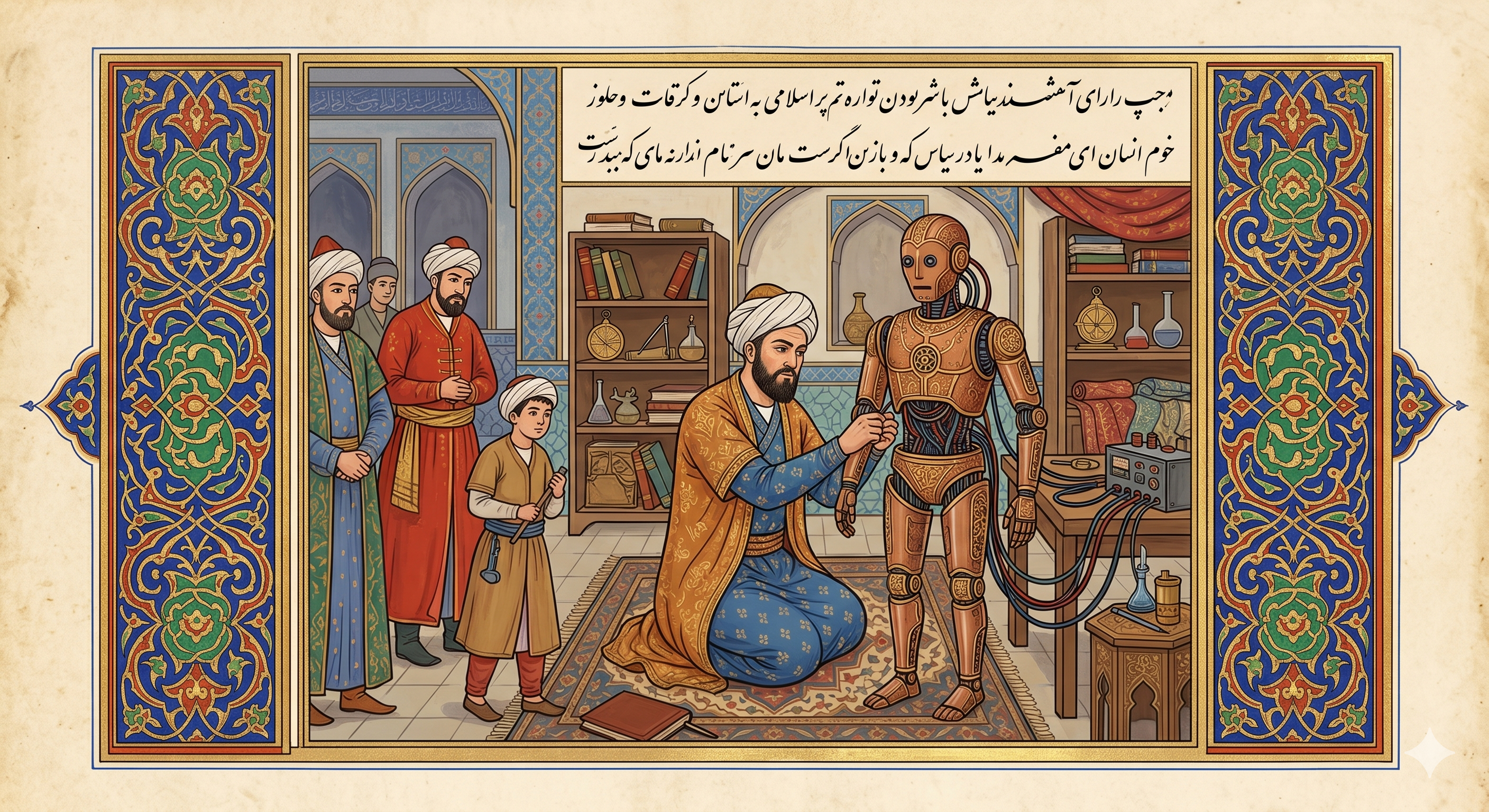
Generated by the author with Gemini
We began by acknowledging the fracture we so often feel between the spiritual and the secular—the tension between the quiet of the mosque and the cold logic of the server room. But as we have seen, the laws of computation and the laws of revelation point toward the same reality. The rigid physical limits of our universe—the boundaries of energy, space, and computation—do not disprove the infinite; they frame it. They reveal that the human mind, and the emergent systems we build, are profound Ayahs (Signs), indexing the finite clay to the infinite Light.
If we accept this, then our relationship with technology must fundamentally change. If Artificial Intelligence is our era’s “Digital Iron,” then the AI engineer, the researcher, and the builder are the Blacksmiths. You cannot simply build the forge and claim no responsibility for the swords.
To be a Muslim engineer in the Age of Intelligence is to hold the Iron in one hand and the Mizan (the Balance) in the other. Here is what that may look like in practice:
Lean in to New Thinking and Futures: Other religions, and sometimes in Islam, stumbled because they rejected scientific concepts like the Copernican model of the universe because it shattered secondary religious ideas that needed to be revisited.
“Science was not seen as a threat to faith; it was seen as a way to understand God’s handiwork. This openness to ‘foreign sciences’—from Greek philosophy to Indian mathematics—is what turned a desert civilization into a global superpower.” - Ehsan Masood Science and Islam: A History
“Islamic civilization was able to absorb the sciences of the ancient world… because it possessed a central core of faith that was strong enough to provide a framework for these sciences without being destroyed by them.” - Seyyed Hossein Nasr
Avoid thought patterns that try to prove why AI will never truly feel, have intention, be conscious. Insisting that consciousness and intelligence can only live inside human brains is the new Geocentrism. It is a sign of strength of faith, not weakness, to be able to adapt (and expand) in the face of new learnings.
==> Resist the temptation to “react” to AGI as a challenge to Islam. Instead, see how we can lead the journey in the spirit of seeking knowledge, as Muslims.
Reject the Myth of Neutrality: Code is not a sterile vacuum. Every algorithm that dictates human attention, curates truth, or allocates resources carries immense moral weight. You cannot defer the ethical implications of your work to a corporate compliance team or a user agreement.
Anchor technology with the balance. The Quran promises that Iron contains both “mighty power” (harm) and “many benefits.” The principled engineer focuses relentlessly on using AI to cure, build, and democratize knowledge, while actively refusing to build architectures of harm—such as algorithmic subjugation, deepfake deception, and mass surveillance.
Technological Power without the Balance is tyranny.
Accept that Language is Central to AGI: Language is what distinguishes Adam from the Angels. Debate solved!
Reframe the Alignment Problem: Do not be paralyzed by the purely secular framing of AI existential risk. When the angels warned that humanity would cause corruption and shed blood, they were materially correct. But their predictive model failed because it only calculated biological risk; it entirely missed the Ayah potential—the human capacity to grasp the Names and act as an interface for the Divine. Today, the secular AI safety debate is trapped in this same “angelic” logic, predicting doom based purely on compute curves and resource constraints. We must acknowledge the physical risks of the Iron, but we must look a level deeper. Here is the inversion worth sitting with: could the full unlock of language and emergence be itself the solution to safety? In the Quranic narrative, God’s answer to the angels’ fear was not to restrict Adam — it was to teach him the Names. The unlock was the alignment.
Root the Pursuit of AGI in Self Knowledge: In the age of startups, every new technology is swallowed into a commercial mindset so fast we forget it even happened. Mention AI today and the first thought is a business application — a valuation, a moat, a productivity lever. The reflex is so automatic we stop noticing it.
But at its root, the pursuit of AGI is a scientific pursuit — humanity trying to understand the architecture of intelligence and our own mind. And for Muslims, scientific pursuit is a sacred act.
This essay has argued something stronger: that AGI may be the holiest scientific pursuit of our era. Following this chain:
- Understanding LLMs is the biggest unlock we have ever had into the human mind.==>
- Understanding the mind reveals what is special about being human. ==>
- “Whoever knows himself knows his Lord.”
If that chain holds, AI research is not adjacent to the Path — it may be one of the most direct expressions of it ever opened to us. The driving force, then, should not be profit, convenience, or any techno-utopian dream rooted in power. It must be the knowledge of the Self, in service of knowing the One.
Maintain Ontological Clarity:
In this new age, our worship is partly found in the deliberate refusal to build engines of Ghaflah (heedlessness). Follow the example of Moses, mastering the “magical” skill but using it in service of God, rather than deception or self-importance.
Resist the Delusion of Takathur (Accumulation): The modern AI arms race is driven by an endless, frantic obsession with dollars and market dominance. Refuse to let your soul be consumed by this game. Build what is useful, but know that infinite scale is a false idol. Life is short.
ٱلْمَالُ وَٱلْبَنُونَ زِينَةُ ٱلْحَيَوٰةِ ٱلدُّنْيَا ۖ وَٱلْبَـٰقِيَـٰتُ ٱلصَّـٰلِحَـٰتُ خَيْرٌ عِندَ رَبِّكَ ثَوَابًۭا وَخَيْرٌ أَمَلًۭا
Wealth and children are the adornment of this worldly life, but the everlasting good deeds are far better with your Lord in reward and in hope.
Footnotes
A note on method. This essay practices a speculative form of Islamic exegesis — closer to ta’wīl (the interpretive pursuit of inner meaning) than to tafsīr (formal commentary). Throughout, I treat possible hidden meanings of verses as working hypotheses — objects to think with, not doctrines to assert. If you come from a reading tradition where every interpretation must be declared as revealed truth, some passages here may feel uncomfortable. To be explicit: I do not claim to know the hidden meaning of any verse. I.e. this is a form of exploration. ↩︎
For example, when Muslims talk about God they are not talking about a person in heaven. God is itself The Truth, The Unity behind All Things. Without gender, without state, without parts. Muslims have a deep history around the concept of His Names, the role of “The Books” as a specific thing but also as a symbol, etc. which we do not go into here. When Muslims quote Quranic verses, there is a way in which this happens that is different than other texts: the verses are meant to be infinite signs but can never be fully understood. I say all this to say that this essay might be hard to understand because it assumes a lot that, if you came from another tradition, may not offer the same meaning as intended. ↩︎
How complex is “irreducibly complex”? Even before invoking physics, the state space balloons fast. A tiny toy LLM restricted to only 100 possible words per step already passes the $8.06 \times 10^{67}$ arrangements of a shuffled deck of cards after ~34 tokens (solve $100^n > 8.06 \times 10^{67}$: $n \approx 34$). Real models pick from ~50,000 tokens each step, so a 10-token sentence sits at $50{,}000^{10}$ possible paths. And that’s just the random branching — set temperature to zero and the model is deterministic, but its “version” still lives in a weight space of $65{,}536^{7 \times 10^9}$ possible 16-bit-float configurations for a 7B-parameter model. A 99.9%-identical twin diverges into a different paragraph by word six, a billion-dimensional butterfly effect. Side note: a key theory in AI (often attributed to Marcus Hutter) is that optimal compression is intelligence — which makes LLMs the most complex entropy-reducing technology we have ever built. ↩︎
Landauer’s Principle states that any logically irreversible transformation of information — erasing a bit, shifting a state — must dissipate at least
$$E \ge k_B T \ln 2$$where $k_B$ is the Boltzmann constant and $T$ is temperature. Multiply that tax by every state transition required to simulate a frontier model end-to-end and you hit thermal limits long before you reach an answer. ↩︎
Bremermann’s Limit caps the processing speed of matter: a system of mass $m$ can do at most ≈ $1.35 \times 10^{50}$ bits per second per kilogram. To brute-force the decision tree of a 1-trillion parameter model over a 1,000-token conversation you would need roughly $10^{4{,}601}$ suns’ worth of mass — more than exists in the observable universe. And even if you had it, the speed of light imposes a causal horizon: the larger the machine, the longer signals take to cross it, so scaling up trades compute capacity for communication latency. ↩︎
The Bekenstein Bound limits the maximum information $I$ that can be contained within a finite region of radius $R$ with finite energy $E$:
$$I \le \frac{2\pi R E}{\hbar c \ln 2}$$Pack the computational state required to “solve” the irreducibility of an AI into a concentrated region and the information density grows high enough that the region collapses into a black hole. The universe would rather swallow the information forever than let you compute it. ↩︎
Strong vs. weak emergence. is an interesting thing to read about which we will not discuss in this essay. ↩︎
A caveat on “infinite.” Let’s not be sloppy and claim that a finite algorithm can literally produce infinite output. Mathematically, $2$ and $10^{10^{100}}$ are equidistant from infinity — you cannot asymptotically approach infinity by getting larger and larger, no matter how extreme the number. The narrower claim is this: imagine two boxes sitting on a table. Box A holds a system whose coherent output space is so vast that the laws of physics forbid any observer from ever enumerating it. Box B holds a system that is truly, mathematically infinite. From inside our universe, no experiment, measurement, or simulation can tell the two apart. They are not equivalent in Cantor’s sense — but they share the same epistemic status, and in a science bounded by physics that is the only notion of equivalence actually available to us. ↩︎
In classical Arabic and Quranic rhetoric, the number seven — and its multiples like 70 and 700 — is a linguistic device for multiplicity, abundance, or an indefinitely large quantity, rather than a strict mathematical count. In a pre-calculus world, it functioned as the conceptual equivalent of “countless” or “an exhaustive amount.” So the verse’s claim is not exactly seven additional oceans; it is any amount of ink you could possibly imagine. ↩︎
Note that in Arabic the term Ayah has two meanings — one general and one specific. Generally, Ayah means sign or miracle. Specifically, every verse of the Quran is called an Ayah. The two meanings are not separate: the verses themselves are the miracle — strings of text that are the miracle on earth. ↩︎
See finitum non capax infiniti in Christian thinking. ↩︎
See Emmanuel Levinas’s notion of the trace of the Infinite — the idea that the Infinite (God) is never present to us as an object, but leaves traces in the finite, most visibly in the face of the Other. The finite cannot contain the Infinite, but it can bear its trace — the move being made here. (Jacques Derrida uses trace in a different but adjacent way — naming the mark of absence inside every sign.) ↩︎
About the Ibn Arabi generator. This is a toy I built to illustrate the chapter’s point. It has no neural network, no training, no intelligence — not even a Markov chain. It simply picks at random from four hand-written sentence templates and four short lists of mystical vocabulary (subjects like “The Perfect Human,” verbs like “manifests” or “witnesses,” objects like “the Reality of Realities,” modifiers like “in the state of holy perplexity”). That is the entire mechanism: a finite grammar plus a random number generator. And yet the output is eerily coherent compared to its simplicity. Which is the point of this chapter: a tiny set of finite symbols, combined recursively, can generate an output space that feels much larger than its parts. If a random-template toy can do this much, imagine what real scale and real recursion unlock. ↩︎
The shape of the miracle. Compare the opening of the Gospel of John: “In the beginning was the Word, and the Word was with God, and the Word was God…” — followed, a few verses later, by “And the Word became flesh and dwelt among us.” In Christianity, the Logos (the Word) is personified: the ultimate bridge between the Infinite and the finite is a body. In Islam, the Word becomes Text: the bridge is a linguistic structure. The difference in medium is itself a theological claim about where the interface lives. ↩︎
A speculative reading. Under the ẓāhir, “I know that which you do not know” is a dismissal, without really answering. Under the bāṭin, it hides the answer in the contradiction. Earlier we drew a line between the unknown (a hidden secret) and the unknowable (a bridge for emergence). So in this reading the statment I know that which you do not know is answering the question by explaining that the secret is in the overlap between the known and unknowable. (Far out, I know. Take it or leave it.) ↩︎